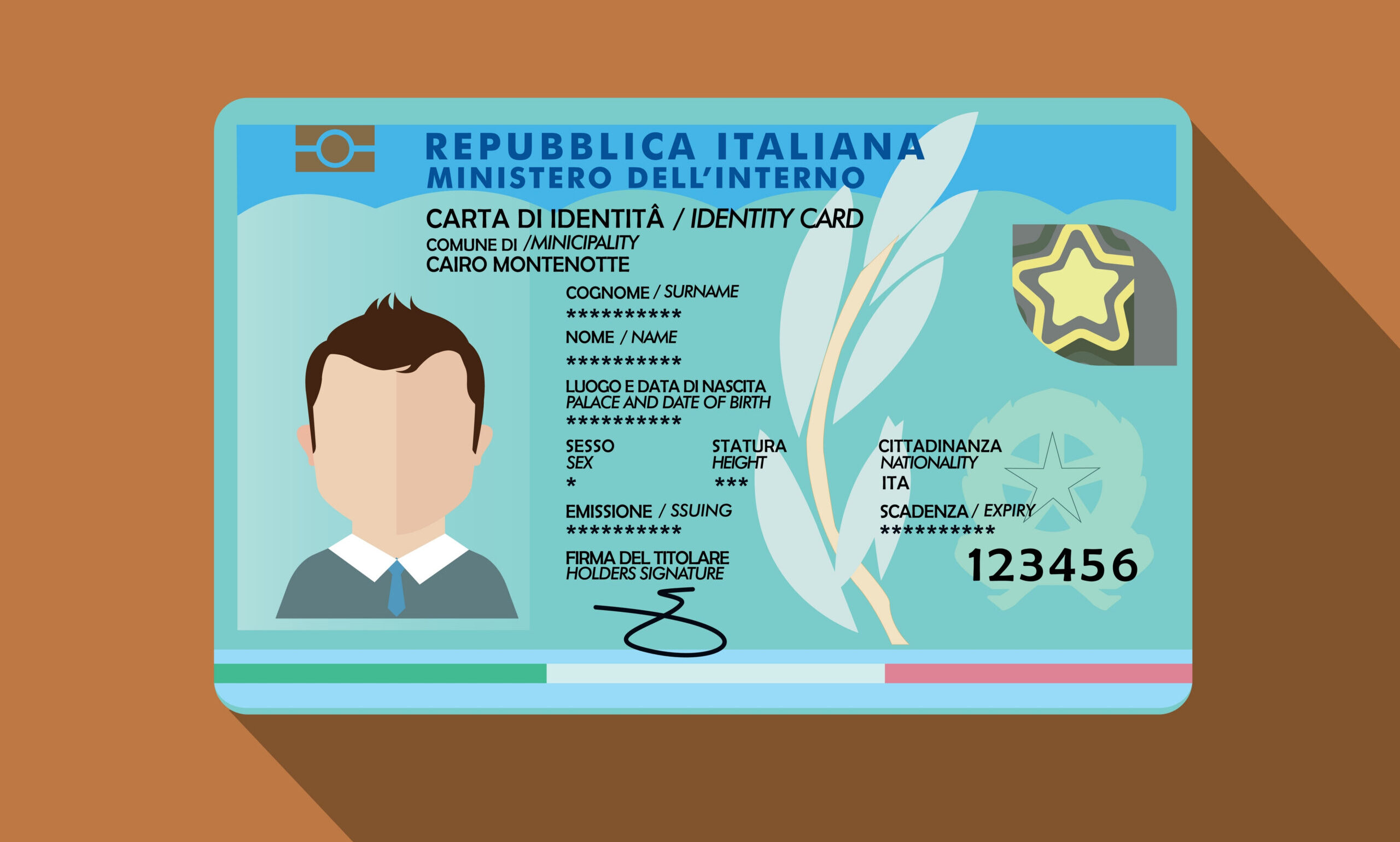

If you live in Italy, it is time to take a close look at your wallet. Whether you are an Italian citizen or an expatriate who has made this country your home, a major bureaucratic deadline is fast approaching. By 3rd August 2026, all old paper-based identity cards (Carta d’Identità Cartacea) and first-generation electronic cards must be permanently retired.

This is not an optional upgrade. Under EU Regulation 2019/1157 and the Italian Decreto del Ministero dell’Interno of December 23, 2015, Italy is standardising its security features across the board. Missing this hard deadline means risking your ability to prove your identity, travel smoothly, or handle everyday administrative tasks.

YOUR NEW DIGITAL KEY TO ITALY

The good news is that the new Electronic Identity Card (CIE) is much more than just a piece of plastic. When you receive it, you will also be given two security codes: a PIN and a PUK. Half of these codes will be handed to you at the town hall, and the other half will arrive in the mail with the card itself.

These credentials completely change how you interact with local authorities. By pairing your CIE with the CieID smartphone app, you get immediate access to all Italian Public Administration portals. It works just like SPID (and in many cases, even faster). With a quick scan, you can log into INPS for social security, download official residency certificates directly from the ANPR registry for free, check your tax status on the Agenzia delle Entrate website, or book medical appointments on your regional health platform.

HOW TO GET YOUR CIE (WITHOUT THE HEADACHE)

The renewal process depends heavily on where you live. If you reside in a major city or a large municipality, your first step should be booking an appointment online through the Ministry of the Interior’s portal (Carta d’Identità Elettronica – Agenda Online). Slots tend to fill up months in advance, so it is wise to act early. However, if you live in a small village or town (piccolo comune), the online booking system is rarely used. In most cases, you can simply walk straight into your local Ufficio Anagrafe during their morning opening hours.

When you go to your appointment, make sure you have the following documents ready to avoid being turned away:

  • Your current Italian ID card.
  • A valid Passport (plus your Permesso or Carta di Soggiorno if you are a non-EU citizen).
  • Your Codice Fiscale.
  • One recent passport-sized photo (either printed or as a JPEG on a USB stick).

Once inside, the clerk will take your digital signature and fingerprints. You will also need to pay the standard issuing fee, which generally ranges between €22 and €23. It is worth checking your local Comune’s website beforehand, as some towns require a pre-payment via PagoPA, while others accept cards or cash directly at the counter.Your physical card will not be issued on the spot. It is printed by the State Mint and will be mailed to your home address — or back to the town hall for pickup — within 6 working days.

A FINAL PIECE OF ADVICE

Be incredibly careful with the document containing your PIN and PUK codes. If you lose one of the halves before setting up the card, retrieving them requires a tedious trip back to the municipality.

Setting up your portfolio to be safe, tax-efficient and compliant in Italy whilst making sure that you fully understand all the facts and charges can be difficult. Local banks and advisers in Italy rarely understand how investments and pensons held outside of Italy work and advisers outside of Italy are usually not familiar with local rules and regulation, which creates additional complications and risks.

Unity Financial Partners provide custom Private Wealth Solutions which include flexible and internationally portable Unit Linked Life Insurance and pensions.

Contact us here to book a meeting to learn how we can help you.


Leave a Reply